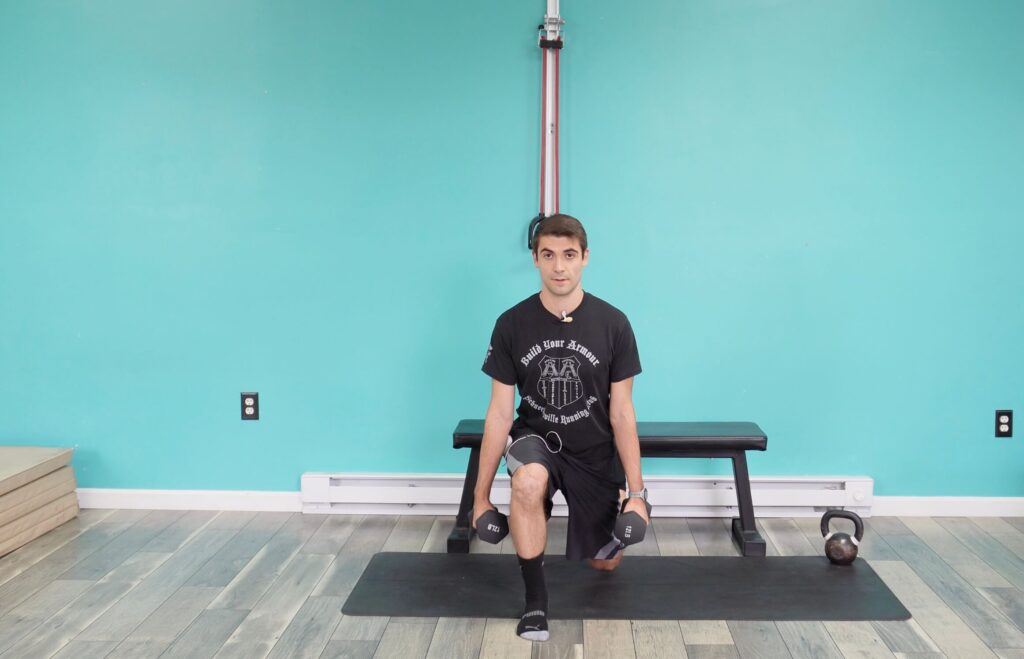
If you’ve ever added Bulgarian split squats to your workout and immediately questioned all of your life choices… you’re not alone. This exercise has a reputation for being uncomfortable, awkward, and way harder than it looks. But when it’s done well, the Bulgarian split squat is also a great tool for building single-leg strength, improving balance, and setting your body up for long-term success.
Muscles Worked in the Bulgarian Split Squat
At its core, the Bulgarian split squat is a rear-foot-elevated squat where your front leg does the majority of the work while your back leg simply helps with balance. It lives in that sweet spot between traditional squats and full single-leg squats, making it a great option if you’re working toward stronger, more controlled single-leg movements.
When done correctly, the Bulgarian split squat targets:
- Glutes (primary driver)
- Quadriceps
- Hamstrings
- Adductors
- Core and hip stabilizers
Because you’re working one side at a time, you’re also challenging balance and evening out asymmetries — two things that often get exposed (in a good way) with unilateral training.
Why It’s a Great Transition to Single-Leg Squats
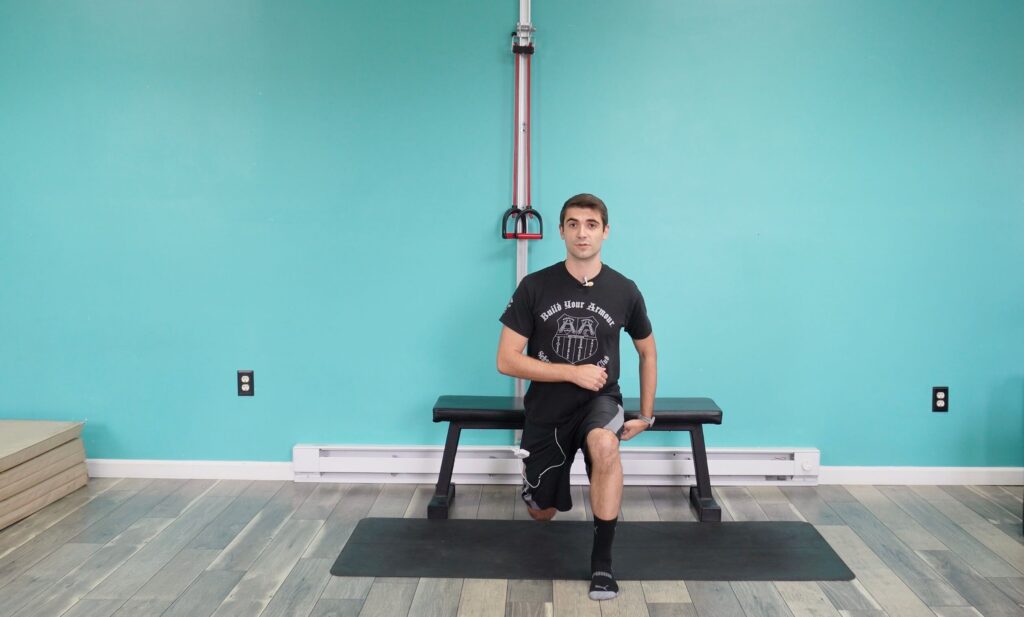
If full single-leg squats feel intimidating or inconsistent, the Bulgarian split squat is a perfect stepping stone.
You still get:
- Single leg strengthening and stability work
- Reduced compensation between sides
- Strength through a deep range of motion
But with just enough support from the back leg to help with balance — not power. Over time, this builds the strength and control you need to progress confidently toward single-leg squats.
How to Do a Bulgarian Split Squat (The Right Way)
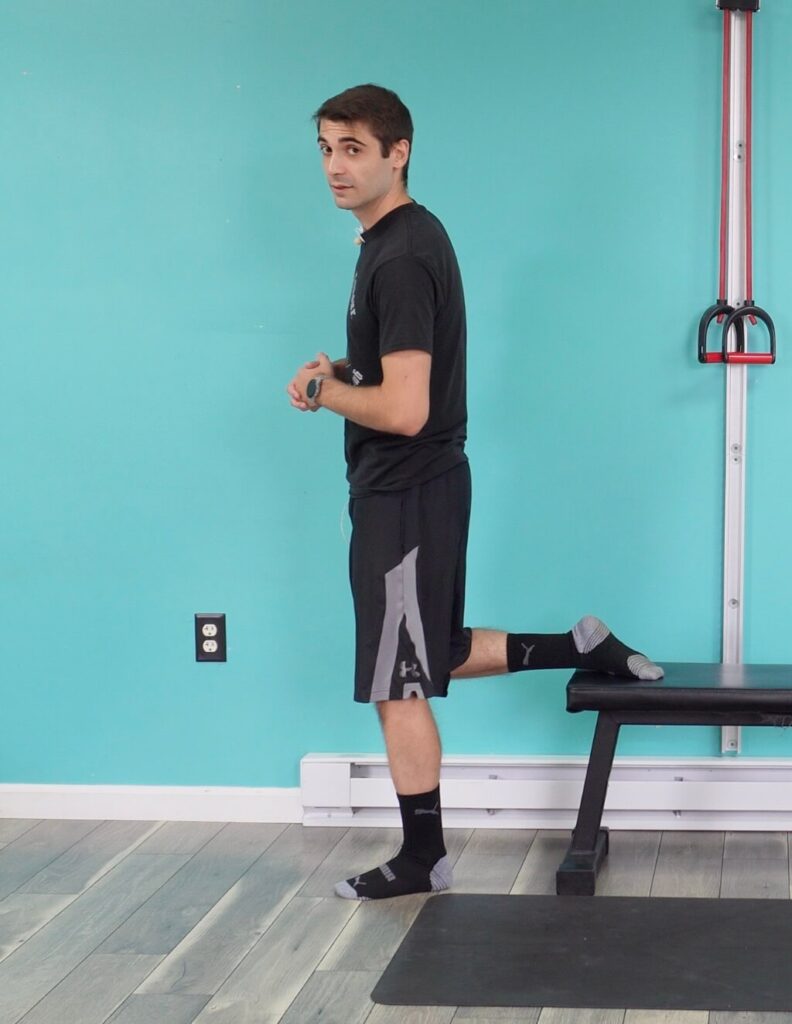
Start by setting your back foot on a bench, box, or elevated surface. Your toes should be flat on the surface, not tucked under or rolled onto the top of your foot.
Your front foot placement is key. Step far enough forward so that when you lower down, your front knee stays stacked comfortably over your foot and your heel stays grounded. Too close and your knee will feel jammed. Too far and you’ll lose stability.
As you lower, think about dropping the back knee straight down, keeping your torso tall and your ribs stacked over your pelvis. Push through the heel of the front foot to stand back up.
One important cue: your back leg is there for balance only. You should not be pushing through it. If you feel your back leg working hard, your setup or spacing likely needs adjusting.
Common Bulgarian Split Squat Mistakes to Avoid
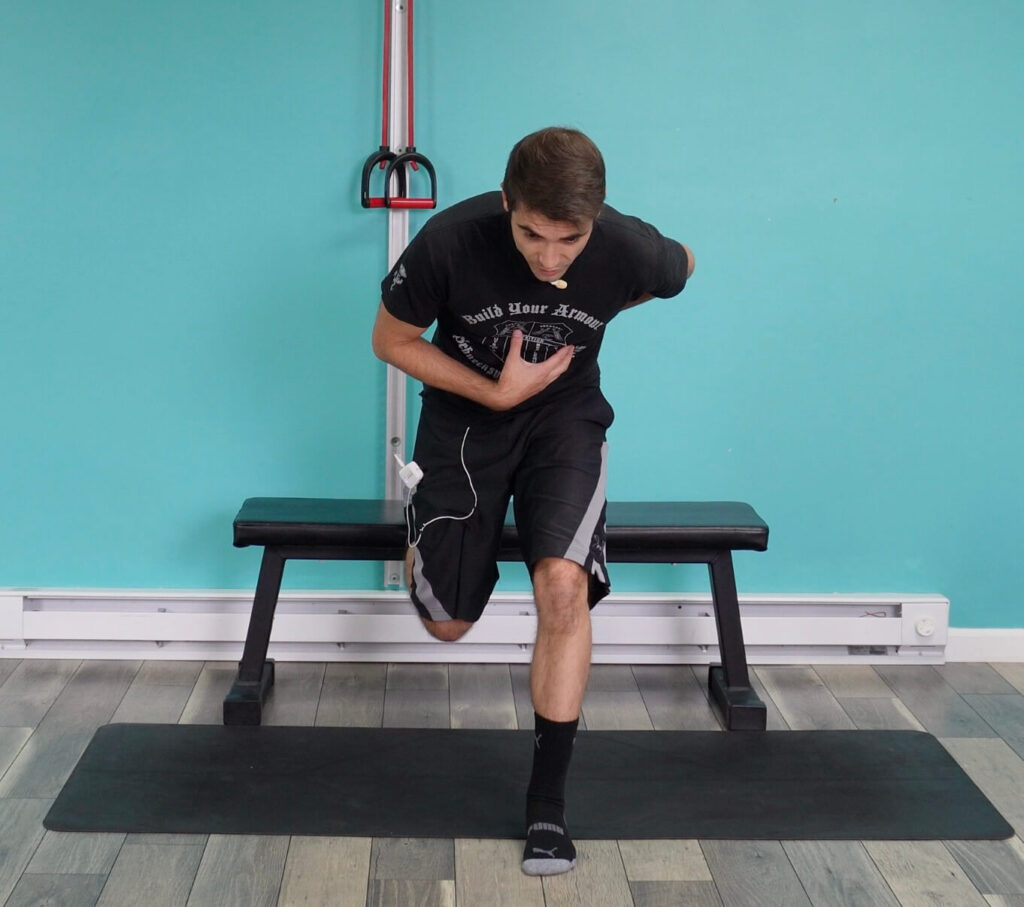
One of the biggest mistakes we see is poor foot alignment behind you. Letting the back foot drift too wide or too closed off can throw off your hips and knee mechanics. Keep it comfortably in line with your body.
Another common issue is leaning too far forward. While a slight forward torso angle can happen naturally, excessive leaning shifts the load toward your quads and increases pressure at the knee, taking work away from the glutes. Stay tall and controlled.
Finally, don’t turn this into a push-off from the back leg. The goal of the Bulgarian split squat is to load the front leg — that’s where the strength gains and carryover happen.
Watch Our Bulgarian Split Squat How To Video
The bulgarian split squat may feel awkward to start, but you’ll be come a pro in no time! Need a little extra help? We’re here for you! Make an appointment from anywhere in the world with our virtual consultations. We’re happy to guide you so you can move better and do what you love longer.
Bulletproof Your Body In 20 Mins
Twenty minutes doesn’t sound like enough time. It’s less than a TV episode, after all. But when it comes to mobility training, it’s more than enough — if you’re doing the right things.
Mobility work doesn’t require hours in the gym. It requires consistency. Small, intentional doses done regularly will always outperform the once-a-week, hour-long stretch session.
Those longer stretch sessions usually feel great in the moment. But by the end of the week? Most people are right back where they started. That’s because lasting change comes from frequent input — not occasional effort.
That’s where impactful mobility work comes in. Not just stretching, but improving strength, stability, and control around the joints and muscles that matter most. In just 20 minutes, you can give your body what it actually needs to move better and feel better — day after day.
Trade the marathon stretch session for short, consistent mobility work.
Try the Mobility-Doc way and feel the difference.