An ankle sprain isn’t just a “tweak.” Whether you rolled your ankle on a run, or coming down from a jump, the issue isn’t just swelling and pain. It’s what happens after: stiffness, limited mobility, and lingering irritation. Especially along the outside of the ankle where peroneal tendinitis plagues people. If your ankle still feels tight weeks later, muscle scraping can be a powerful tool to restore range of motion (ROM) and support healing.
Let’s break down exactly how.
Why Range of Motion Matters After an Ankle Sprain
After an ankle sprain, your body suffers from limited range of motion and stiffness. That’s normal.
But if mobility isn’t restored properly:
- The calf gets tight
- The tendons around the ankle stiffen
- The joint loses range of motion
Limited ankle mobility changes how you walk, squat, run, and jump — and that’s when chronic pain or repeat sprains show up. This is where muscle scraping (also known as instrument-assisted soft tissue mobilization) can help.
What Is Muscle Scraping?

Muscle scraping uses a specialized tool (like a Sidekick tool) that glides along muscles and tendons with controlled pressure.
The goal:
- Improve blood flow
- Break up adhesions and scar tissue
- Reduce tissue stiffness
- Improve joint range of motion
- Decrease irritation
When used strategically after an ankle sprain, it can dramatically improve your range of motion.
3 Areas to Muscle Scrape After an Ankle Sprain
If you’re dealing with stiffness or peroneal tendon pain, there are three high-value zones.
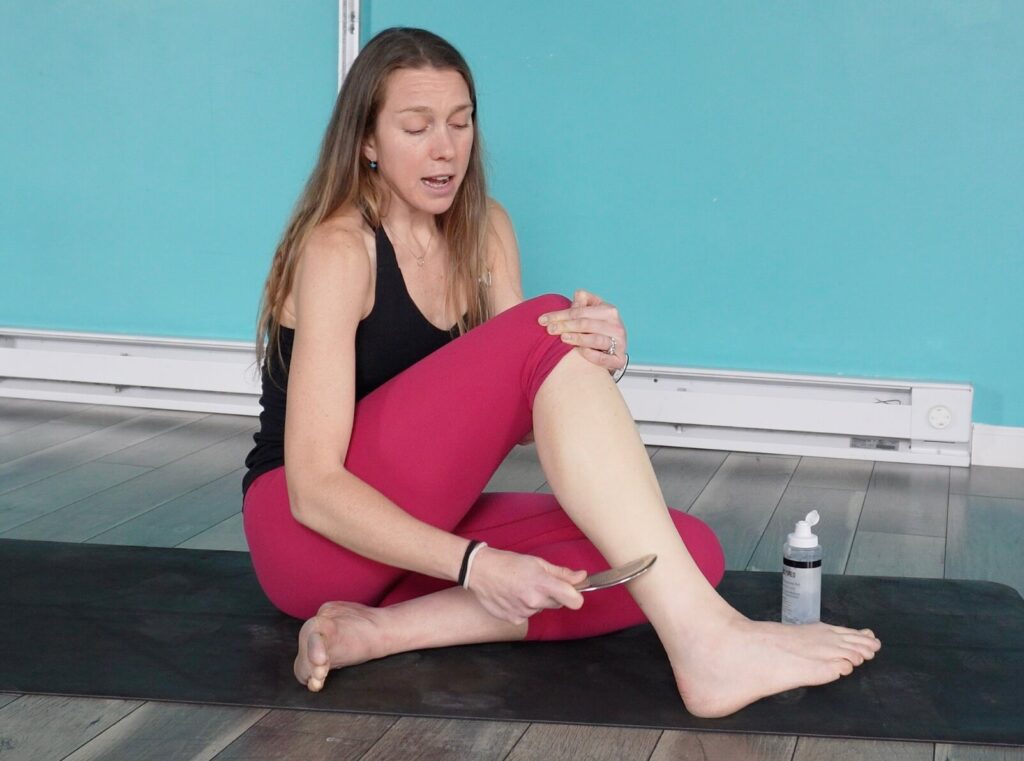
The Calf & Peroneal Muscles (Outside of the Lower Leg)
Why it matters:
The calf muscles (gastrocnemius and soleus) directly affect ankle dorsiflexion. The peroneals run down the outside of your lower leg and stabilize the ankle — and they’re commonly irritated after an ankle sprain.
How to scrape:
- Apply a light layer of lotion or oil (we use ultrasound gel)
- Start in the muscle belly – mid-calf
- Scrape in 1-2 inch strokes from the top to the bottom (you want to cover the entire area)
- Spend a little extra time along the outside of the leg (peroneals)
Work for 1–2 minutes per area (no more than 4 mins total)
The Tendon Between the Achilles and the Malleolus
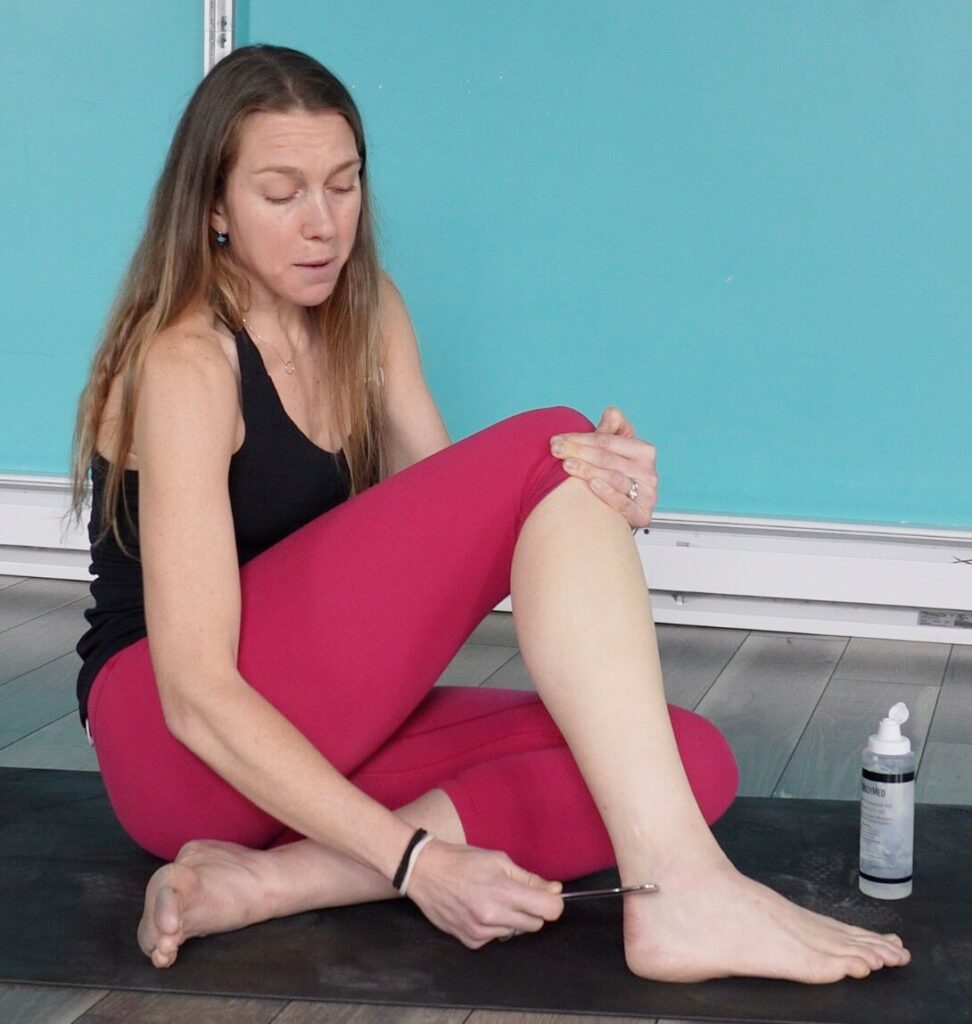
This is the small but powerful space just outside the Achilles tendon and behind the ankle bone (lateral malleolus).
Why it matters:
The peroneal tendons come through this region. After an ankle sprain, swelling and scar tissue can limit their range of motion— leading to peroneal tendinitis symptoms like:
- Pain along the outside of the ankle
- Snapping or tightness
- Stiffness when pushing off
How to scrape:
- Use smaller, controlled strokes with light pressure – this is quite sensitive
- Stay just outside the Achilles.
- Work gently around the back of the ankle bone.
Avoid aggressive pressure — this is a tendon-heavy zone.
Under the Ankle Bone & Around to the Front of the Foot
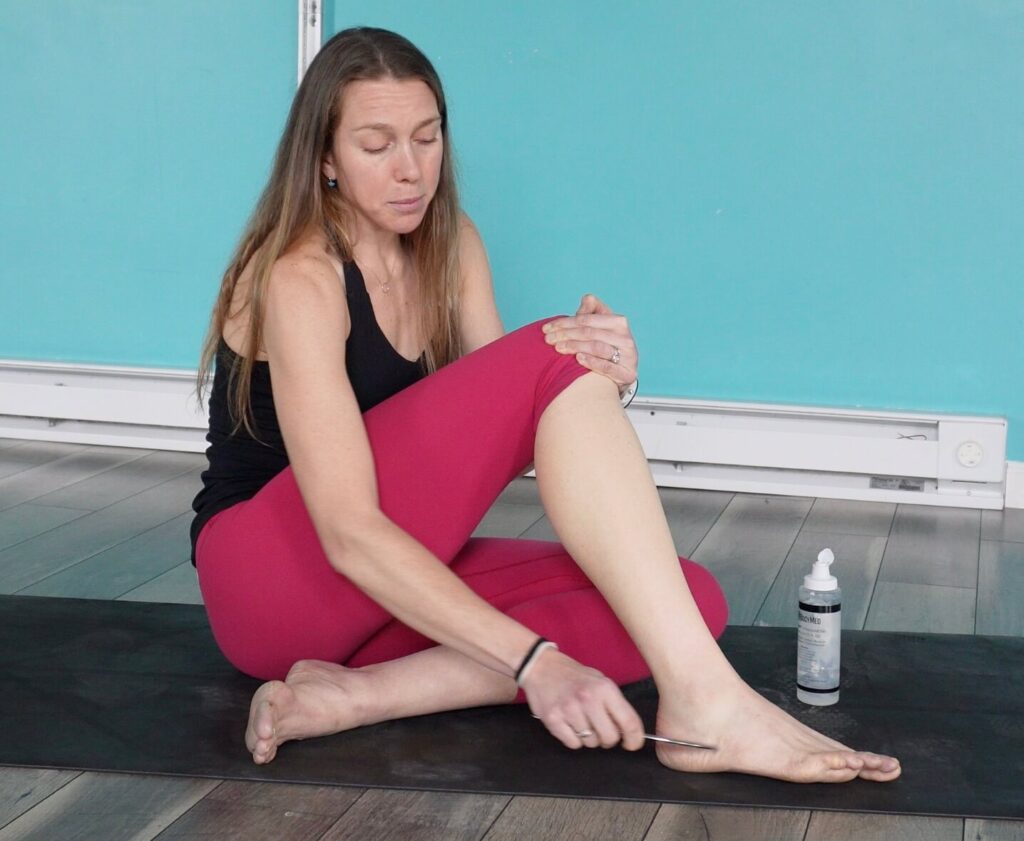
Light pressure here is so important!!!
Why it matters:
After an ankle sprain, the ligaments and small tendons underneath the lateral malleolus can stiffen. If those tissues stay stiff, ankle mobility stays limited.
How to scrape:
- Start just under the ankle bone.
- Move forward toward the front of the foot.
- Use light strokes.
- Keep pressure delicate.
This helps reduce stiffness in the ligaments and restores movement across the front of the ankle joint.
Bonus: Stretch After You Scrape
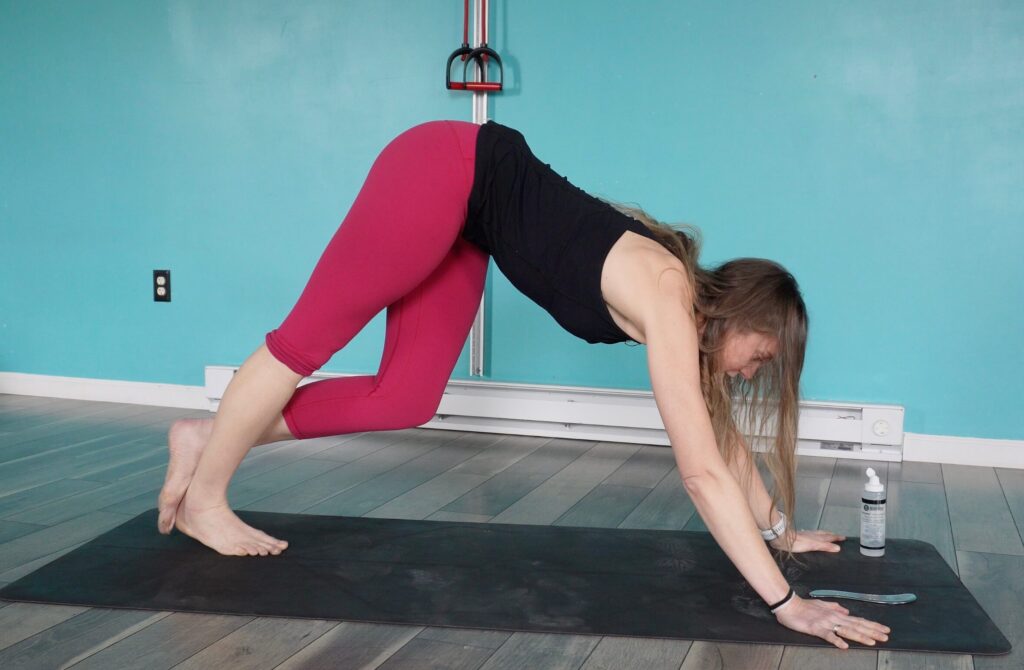
Muscle scraping prepares the tissue — but stretching unlocks the new range of motion.
If you want maximum improvement in ankle mobility, follow scraping with these two movements:
Downward Dog (Single leg)
Great for:
- Calf lengthening
- Improving dorsiflexion
- Posterior chain mobility
If a single leg is too intense, try regular but press one heel down at a time to bias the injured side.
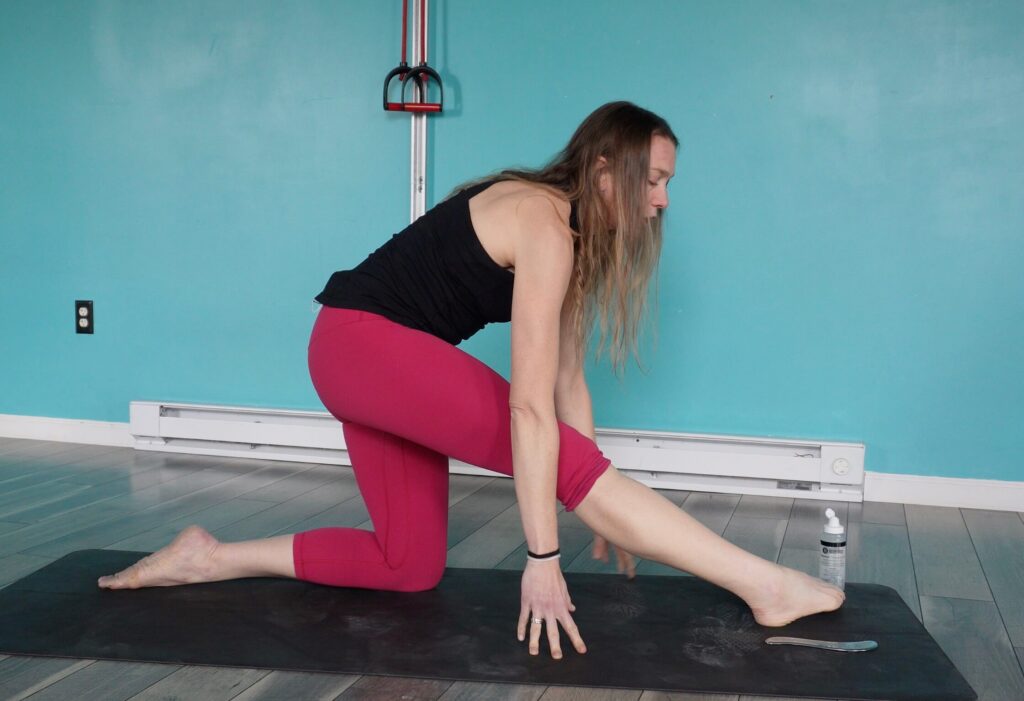
Hamstring Stretch with Ankle Turned In
This one targets the peroneals.
- Sit on your knees with one leg in front of you
- Slightly turn your ankle inward (inversion).
- Hinge forward at the hips.
- Hold 20–30 seconds.
Turning the ankle inward stretches the peroneal muscles more directly — especially helpful for peroneal tendinitis.
When Should You Use Muscle Scraping After an Ankle Sprain?

Muscle scraping is most effective:
- After the acute swelling phase
- When stiffness is limiting motion
- If peroneal tendinitis symptoms linger
- Before mobility or strength work
It should not replace strengthening — but it’s an excellent tool to improve range of motion so strength training becomes more effective.
When SHOULDN’T you use this routine?
The muscle scraping techniques we’re talking about and demonstrating for you are more about improving your range of motion after a general ankle sprain or if you’re dealing with peroneal tendinitis. This isn’t for reducing swelling or severe and acute sprains. If you’re dealing with an acute sprain or something more severe it’s important to speak with your doctor or physical therapist before trying these techniques.
How To: Muscle Scraping for Ankle Sprain Recovery
The Bottom Line
If you’ve had an ankle sprain and your mobility still feels restricted, don’t just stretch harder.
Address the soft tissue restrictions and follow it up by targeted stretching to dramatically improve ankle range of motion and support long-term healing.
Because here’s the truth:
You don’t just want your ankle to feel “better.” You want it to be stronger, more mobile, and ready for whatever you love doing next.
Dealing With Achilles Tendinits?
If your Achilles has been nagging you, check out our blog to learn how to calm irritation, restore mobility, and build real strength the right way.
Our Favorite Muscle Scraper
Looking for your own muscle scraper? We use the Sidekick Echo in our clinic every single day. Sidekick tools are durable, easy to use, and built to last. If you want high-quality muscle scraping tools without the premium price tag, Sidekick delivers pro-level results at an affordable cost.