
You’ve decided to invest in muscle scraping tools—but with so many options out there, it’s hard to know where to start. Welcome to our comprehensive guide on what materials and styles you should actually be looking for in a muscle scraper.
Why Trust Our Opinion?
If this is your first time here, welcome! We’re Mobility-Doc—an independently owned physical therapy clinic based in Bethlehem, Pennsylvania. We specialize in movement and work with athletes and weekend warriors who never want to stop doing what they love.
Needless to say, we do a lot of muscle scraping.
And here’s the best part: we don’t rely on expensive, overhyped tools. We use the same brand we’re going to talk about in this article every single day. So when we say we have real, hands-on experience with these tools—we mean it.

What Are Muscle Scraping Tools (And What Do They Actually Do?)
Muscle scraping (also known as instrument-assisted soft tissue massage) is about improving how your body feels and moves.
It helps to:
- Stimulate the nervous system
- Increases bloodflow
- Break up adhesions and scar tissue in the muscles and fascia
Despite what you may have heard, it’s not about scraping as hard as you can to cause bruising. Done right, muscle scraping uses the right angle and amount of pressure to cause lasting changes in the muscles and connective tissue.
The tools are an instrument you use to help you create that change in the tissue. They’re typically small, easy to hold, and come in varying ranges of materials.
Material Matters: Plastic vs. Stone vs. Metal

Not all muscle scraping tools are created equal. Material plays a big role in how effective and easy they are to use.
These always seem like a safe start, but they’re harder to “feel” what you’re doing.
Pros:
- Affordable
- Lightweight
- Easy to travel with
Cons:
- Edges tend to be less precise
- Less durable over time
- You don’t get feedback through the tool (we’ll talk more about this!)
They can work—but it’s not the best solution. Our recommendation – pass on this.
A step up from plastic, and has a little more weighty feel in the hand.
Pros:
- Smooth surface
- Visually appealing
Cons:
- Have to push harder
- Can be slippery to hold
- You don’t get feedback through the tool
They look great—but if you’re struggling to get a good grip, you’re not going to be consistently getting what you need (plus your hand gets tired). Definitely better than plastic but not ideal.
Our first choice! When used correctly, metal tools will actually give you “feedback” in your hand when you hit an area that needs attention. That feedback almost feels like a small vibration as you feel bumpiness underneath the skin.
Pros:
- Extremely durable
- Easy to grip
- Better tactile feedback (you can feel what you’re working on)
- More control over pressure and application
Cons:
- Can be more expensive
This is why most professional-grade muscle scraping tools are made from stainless steel. If you’re serious about adding muscle scraping into your routine, this is the category worth investing in.
The Edge & Shape
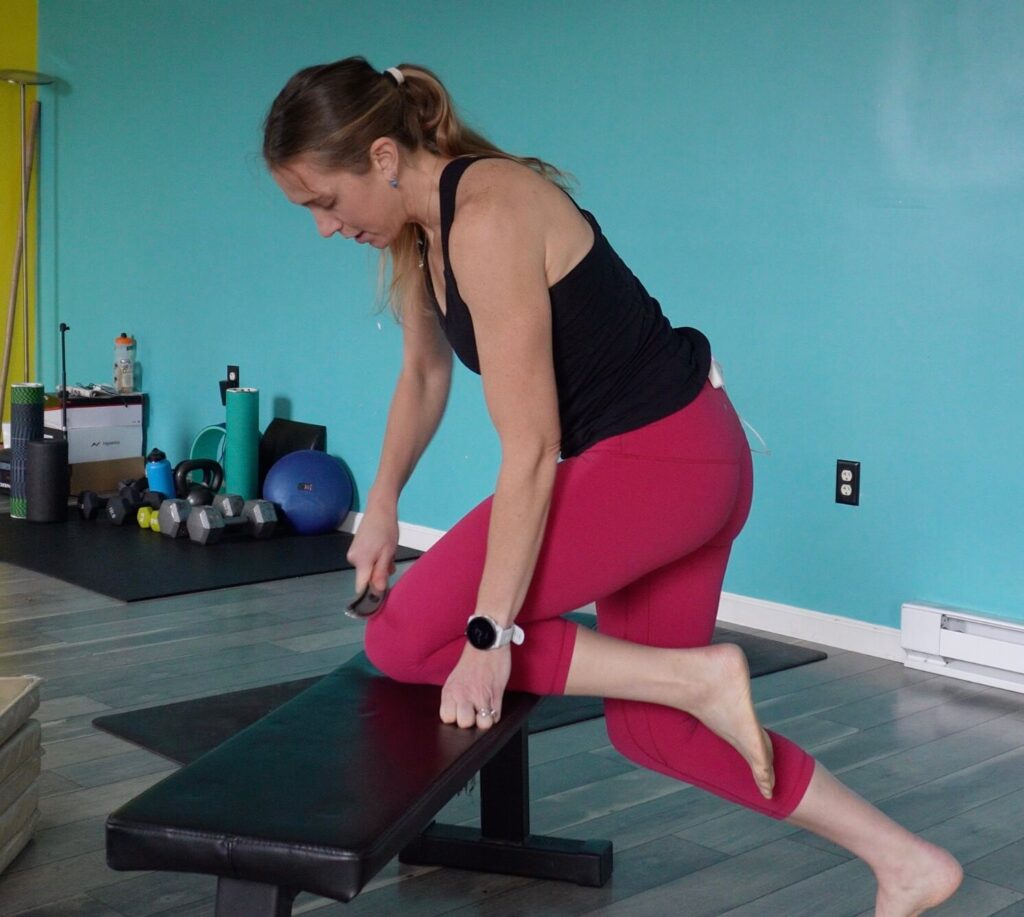
If there’s one thing that separates good muscle scraping tools from a great one, it’s the shape and edge.
Too sharp or straight? It feels aggressive and irritating. Too dull and round? You’re just getting the right angles you need
What you want is a beveled edge that allows you to:
- Apply consistent pressure
- Stay comfortable without being too sharp or too dull
- Actually influence the tissue underneath
Different contours help with different ways of muscle scraping:
- Concave – helps apply lighter pressure for more sensitive areas
- Convex – allows for deeper muscle access
- Ends – help you reach areas that are small and can be awkward
A well-designed tool isn’t random—it’s built to match the shape of your muscles and body to get you the results you need.
Why Credit Cards and Butter Knives Don’t Work
We’ve all seen the DIY hacks.
A credit card or a crowd favorite… the butter knife. And while it might look similar, here’s the reality:
- The edges aren’t designed for skin contact or with the right beveled edge/angle
- There’s no ergonomic grip → which means poor pressure control and awkward handling
- You can’t create consistent, repeatable results
- I probably wouldn’t want to put lotion or emollient on my credit card…
Could you use them? Sure. But we really wouldn’t recommend it
Will you get the same outcome as a properly designed muscle scraping tool? Not even close.
Our Go-To Muscle Scraping Tools

When it comes to muscle scraping tools we trust (and actually use ourselves), Sidekick Tools is the brand we reach for every day. They’re the perfect tool at approachable pricing. They have 3 options based on budget and what you’re looking for. We’ll break down all 3 and tell you our clear winner!
The Curve
The baseline of Sidekick’s tools, the curve is the stone muscle scraper. It has more rounded edges and a less intense edge. It can get the job done, but the main reason we’d choose this one is affordability. If you can’t spend more, this is an OK tool to get.
The Swerve
Their basic stainless steel model, the serve offers more intensity in the curves and edges. This provides the ability to really hug your muscles with the scraper. Another great thing is that it is metal! You will get the benefits of feeling feedback into your hand.
The downside of this tool is that it’s a little slippery and smaller to hold in the hand than our next tool.
The Echo (Our Favorite)
The Echo is the tool we use in our office every day. It’s made of medical-grade stainless steel and is textured so it’s easier to hold. It’s a little heavier in the hand and a little longer than the swerve so it’s easy to grip and hold onto. It is the absolute best tool for the price out there!
How to Choose the Right Muscle Scraping Tool for You
So which one is right for you? Hands down we recommend the Echo. It really is the best tool we’ve found with affordable pricing. If it feels a little too out of reach, try the swerve, and lastly the curve. You’ll have to work a little harder, but you’ll still get benefits!
Better Tools = Better Results
Muscle scraping tools can absolutely make a difference in how you feel and move—especially if you know how to use them! The combination of material, shape, and edge design isn’t just detail—it matters in how easily it will help you recover.
Invest in a quality tool, use it consistently, and you’ll get a lot more out of your recovery routine. Have any questions? Reach out to us on our website or find us on our socials! We’d love to hear from you!
Use This Muscle Scraping Protocol To Get More Benefits!
It would be nice if you could just muscle scrape and call it done! We all know the world is more complicated than that.
Here is our preferred way to incorporate muscle scraping into a recovery or rehab routine!
Try our Upper Body and Lower Body Muscle Scraping Routines! They’re 10 mins each with follow along videos included!