The curtsy squat isn’t here to replace your traditional squats—they’re here to help them. Curtsy squats challenge your body outside of vertical lines. This movement trains strength, stability, and control that correlates directly into everyday life. If you’re asking what curtsy squats are good for, the answer starts with stronger hips, better balance, and movement that holds up in the real world.
What muscles do curtsy squats work?
The curtsy squat is a multi-muscle, multi-plane movement. That means more bang for your buck. By stepping back and slightly across the body, you force your muscles to stabilize, control rotation, and produce strength all at once.
The main muscles worked in a curtsy squat include:
- Glutes: Critical for hip stability and knee alignment
- Quadriceps: Helping control the lowering phase and drive you back to standing
- Hamstrings: Supporting hip and knee control
- Inner thighs (adductors): Assisting with stability as the legs cross behind
- Core and hip stabilizers: Keeping your pelvis and torso steady and square throughout the movement
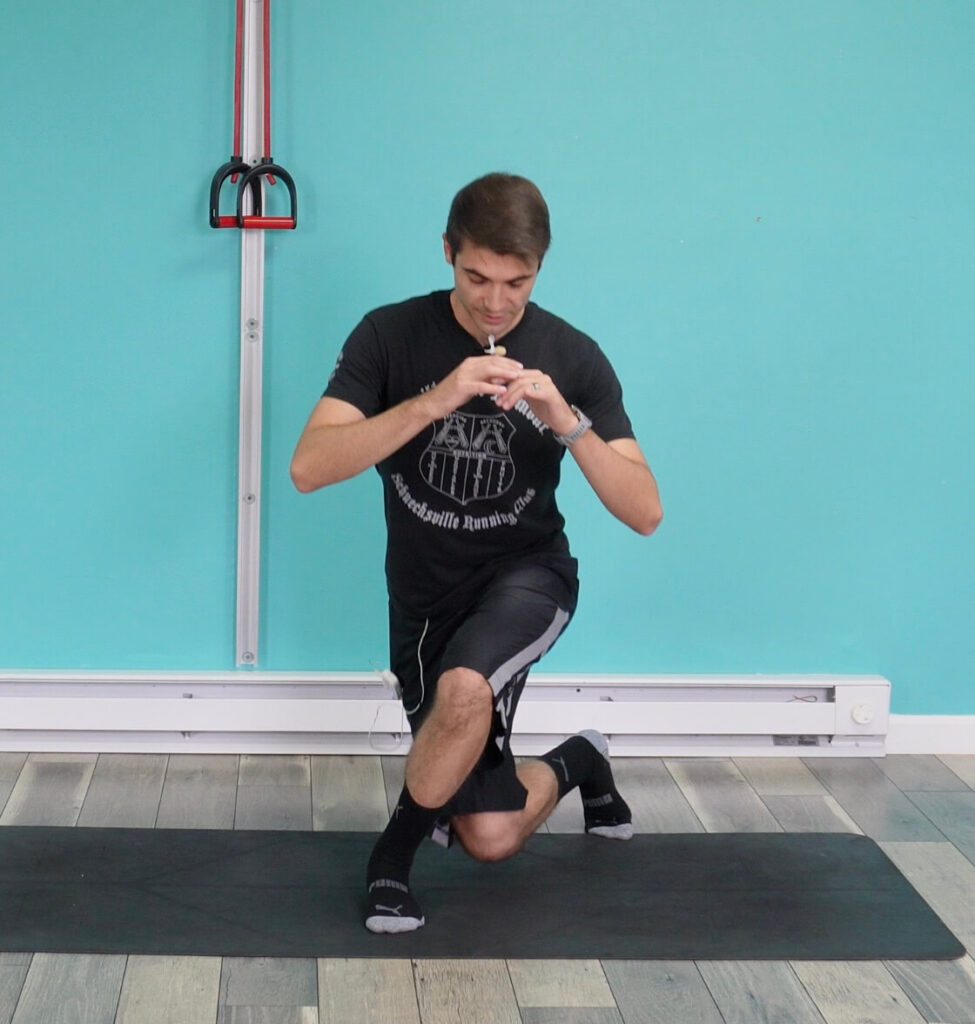
What are curtsy squats good for?
Curtsy squats shine when it comes to training the hips to handle side-to-side and rotational forces. Most daily activities and sports don’t happen in a perfectly straight line, and this exercise helps prepare your body for that reality. Think about it. When you bend down to pick up that piece of paper off the floor, are you doing the perfect squat?
The curtsy squat is especially good for:
- Improving hip stability and control
- Strengthening the glutes in ways traditional squats don’t
- Challenging single-leg strength and balance
Curtsy squat vs. Curtsy Lunge: is there a difference?
Functionally speaking, there’s no meaningful difference between a curtsy squat and a curtsy lunge. The terms are often used interchangeably to describe the same diagonal step-back movement pattern. Regardless of the name, what matters most is execution:
- Controlled range of motion
- Stable front foot
- Level square hips
- Knee tracking over the toes (not collapsing inward or outward)
If you’re feeling the movement primarily in your hips and glutes—not your knees—you’re probably doing it right.
Common Mistakes To Avoid
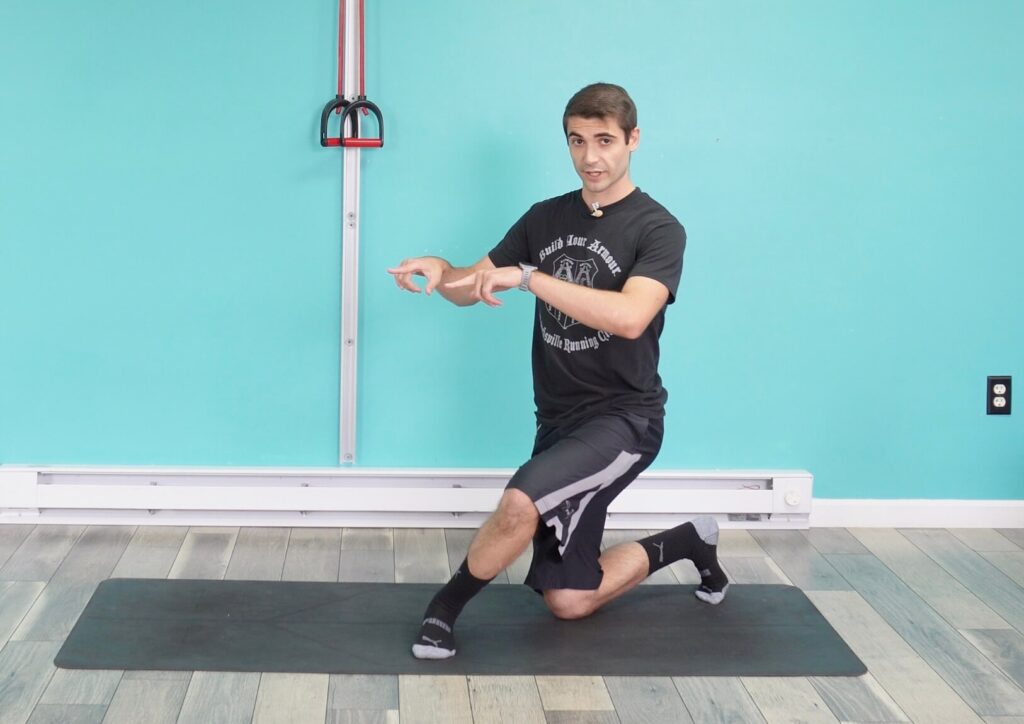
Two of the most common errors we see are allowing your hips to open and taking too big of a step. Your curtsy squat should have square hips that stay facing forward. It’s easy when stepping back to allow your body and hips to open towards the side. This changes how your body is working and often leads to issue #2.
Too big of a step. When your step is too big a few things can happen. You feel stuck and twisted, and most likely your knee is no longer tracking properly. By keeping your stance behind and only slightly across you’ll help that knee track properly over the pinky toe. Not completely falling open or falling to the inside.
Curtsy squats are effective because they challenge mobility, strength, and control all at once. That also means they’re not something to rush. Start with a comfortable range, move with intention, and prioritize quality movement over heavy weights.
Watch our How To Video!
Time For A Tune Up?
If your body’s been feeling a little “off” lately—tight in spots it shouldn’t be, stiff warming up, or just not moving the way it usually does—that’s your sign. It might be time for a little extra help…
Something bigger is starting to happen and it’s important you take care of it before it becomes a real problem.
Whether you’re looking for a quick reset or a few visits to get you back on track, we’re here to help educate you and fill the gaps with hands-on care, new routines, and targeted recovery so you’re not just managing discomfort—you’re actually moving better.
You don’t need to do more… you just need the right support.
Let’s get you feeling like yourself again. 💪✨