Legs giving out at the end of your run? Hip flexors play a huge role in stride efficiency, knee drive, and overall speed. The catch? They are one of the most overlooked pieces of the running puzzle. Most people only stretch them without ever building strength. Stretching alone isn’t going to get you there. If you want real carryover to your running performance, you need a mix of mobility + strength + control. Let’s break down exactly how to strengthen your hip flexors for faster running—no gym required.
Why Hip Flexor Strength Matters for Running
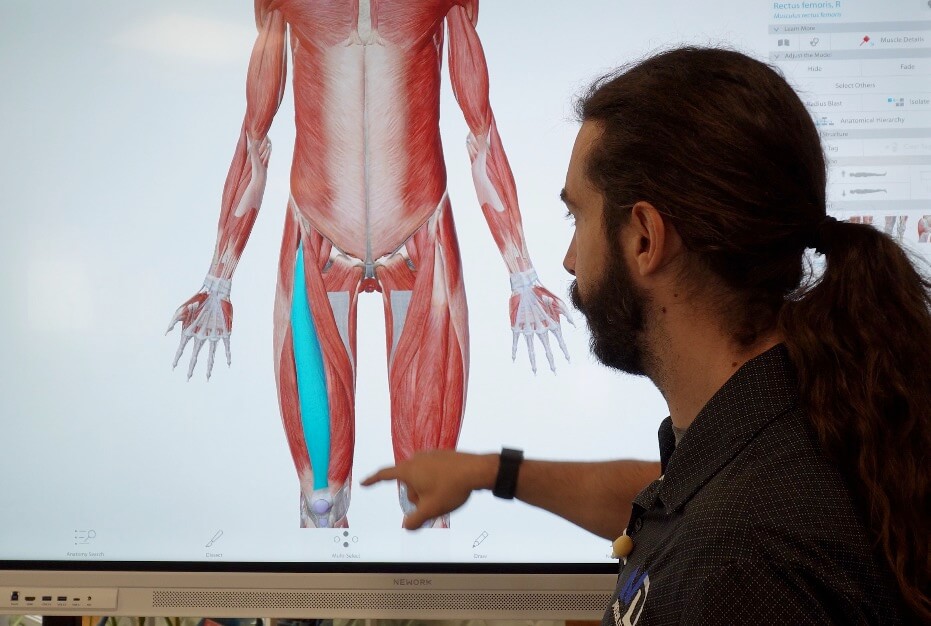
Your hip flexors (primarily the psoas and rectus femoris) are responsible for:
- Driving your knee forward with each stride
- Helping you maintain efficient running mechanics
- Supporting pelvic stability and reducing energy leaks
Weak or poorly conditioned hip flexors can lead to:
- Slower stride turnover
- Compensation through your lower back
- Increased risk of injuries
The top 3 hip flexor injuries from running:
- Snapping Hip Syndrome
- Hip flexor strains
- Tendinopathy
Four Key Aspects of Hip Flexors for Running
To actually improve your running speed and efficiency, you need to think beyond just “tight” or “weak.” Your hip flexors need to check four important boxes:
- Flexibility – Your ability to move through a full range of motion. If you can’t access hip extension, your stride gets cut short before it even starts.
- Strength – Your ability to actively drive the knee forward with power. This is what creates faster turnover and more explosive strides.
- Stability – Your ability to control your pelvis and spine while moving. Without this, your body leaks energy and compensates—usually through the lower back.
- Work Capacity – Your ability to repeat hip flexion over and over again without fatigue. Running isn’t about one strong rep—it’s about thousands of efficient ones.
Most runners focus on just one or two of these, but real performance comes from building all four together.
Step 1: Hip Flexor Stretches
Before you strengthen, you need access to the range.
1. Kneeling Hip Flexor Stretch (Psoas Focus)
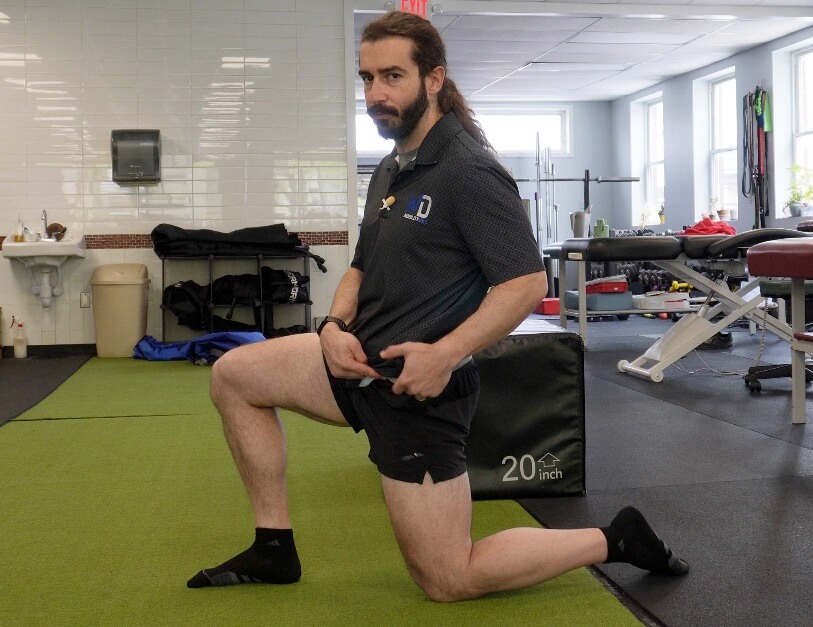
This is your starting point—but a lot of people make a key error that greatly reduces the benefits of this stretch.
How to do it:
- Get into a half-kneeling position
- Tuck your pelvis slightly (posterior tilt)
- Actively squeeze the glute of the back leg
- Keep your ribs down (don’t flare or arch your back)
Why it works:
That glute squeeze creates a deeper, more targeted stretch on the psoas without dumping into your lower back.
2. Couch Stretch (Rectus Femoris Focus)
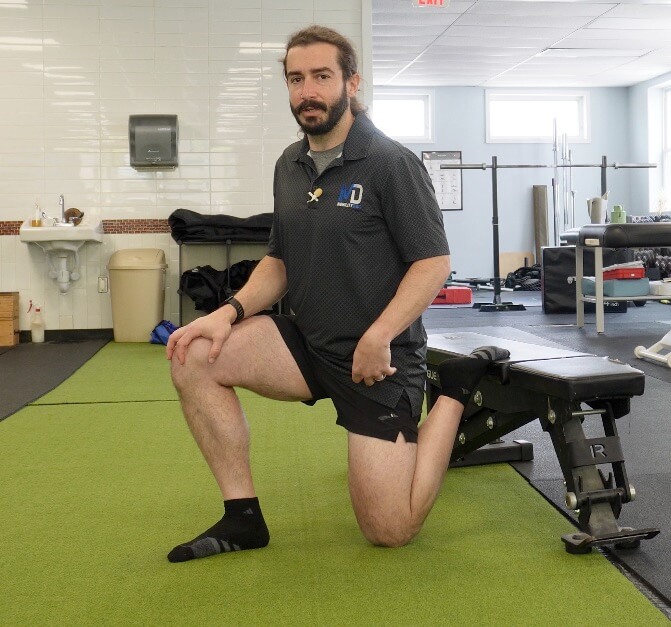
How to do it:
- Back foot elevated against a seat, bench, or couch
- Front foot planted in a lunge position
- Use the same active glute technique!
- Stay tall, but don’t over-arch your lower back
Common mistake:
Leaning back to “feel more stretch”. Don’t get us wrong, we do want that! But engaging your glute makes it a whole other ball game. Make sure you engage first before you try and get into that upright position.
Step 2: Build Strength That Transfers to Running
Flexibility without strength is unused potential. Now let’s train your hip flexors to actually maximize their range of motion.
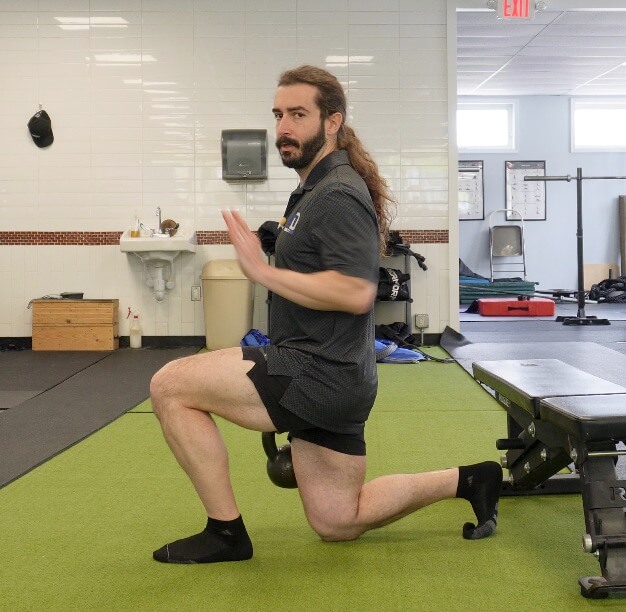
1. Split Squats
Simple. Effective. No equipment needed.
Why it matters:
- Builds strength through a large range of motion
- Trains both hip flexion (front leg) and extension (back leg)
- Direct carryover to running mechanics
Focus on:
- Controlled slow tempo
- Staying balanced and upright
2. Isometric Split Squat Holds
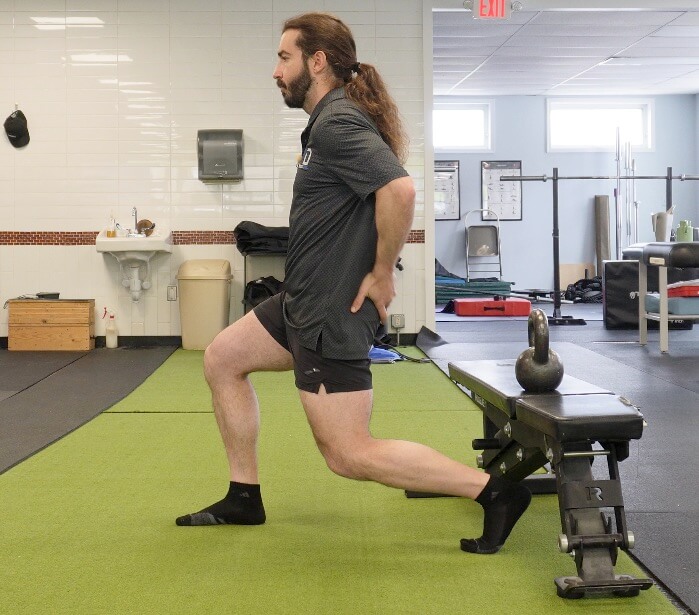
Isometric holds are so important for tendon strength!
How to do it:
- Drop into the bottom of a split squat
- Hold that position for 20-30 sec
Why it works:
- Builds tendon strength (huge for durability)
- Improves work capacity in the hip flexors
If you want to stay injury-free while increasing speed, this is non-negotiable!
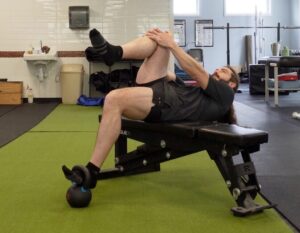
3. Hip Flexor Dropbacks
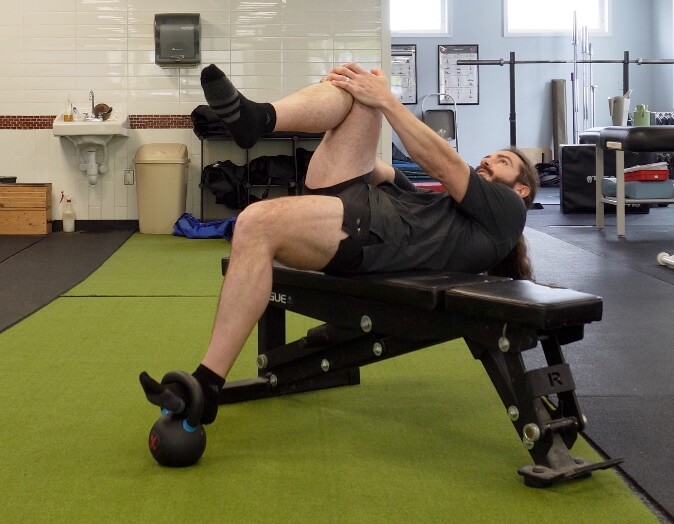
How to do it:
- Grab a bench or chair and sit on it sideways. You also need something to secure your bottom foot.
- Hold your free foot close to your chest and slowly lean back until you’re parallel to the floor.
- Return to start with control
Important:
Secure your feet!!! We like to use a kettlebell, but that being said if you’re at home with no weights, you can still do this on a chair. You’ll just need to secure your bottom foot on something strong. We don’t want you falling on your head…. Like we did the first time.
Why it works:
- Directly loads the hip flexors
- Builds strength through lengthened positions
- Improves muscular endurance and control
These can take some getting used to. What is most important is working your way up to having full range of motion. It’s OK to start with less reps and work your way up!
4. Single-Leg RDLs (Romanian Deadlifts)
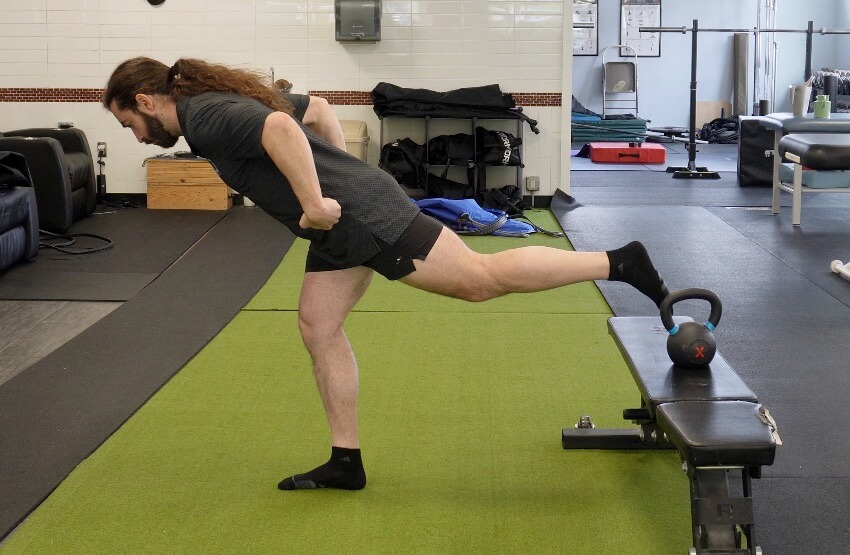
Not a direct hip flexor strength move—but don’t skip it.
Why it matters:
- Improves lower body coordination
- Enhances balance and control
- Teaches your hips to work as a system
Better coordination leads to more efficient force transfer resulting in what we all want… faster running.
How to Put This Into a Simple Routine
You don’t need hours in the gym. Just consistency.
Quick routine (2–4x per week):
Flexibility:
- Kneeling hip flexor stretch – 30–45 sec each side
- Couch stretch – 30–45 sec each side
Strength:
- Split squats – 8–10 reps each side (with or without weight)
- Isometric split squat hold – 20–30 sec each side
- Hip flexor dropbacks – 8–10 reps
- Single-leg RDLs – 6–8 reps each side (remember not for strength! Coordination is the focus)
Watch our How To Video!
If your goal is faster running, stop treating your hip flexors like they only need to be stretched. They need to be flexible to move well, stable to maintain control, strong to produce force and power, and lastly work capacity that leaves you able to handle repetition. Let us know what you think of these exercises on our socials! We love hearing from you and how this is helping your running.
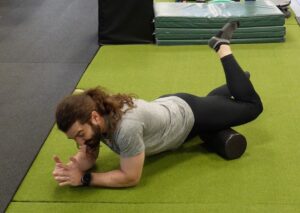
This is Part 1 of our Hip Flexors for Running Series! Next we’re going to talk about 5 ways to self treat your hip flexors at home. Make sure you sign up for our email newsletter so you’ll get mobility tips in your inbox every Friday!
Do more than just your hip flexors need some attention?
MDRx Runner – Strength & Mobility is a simple, full-body routine you can plug into your warm-up or cooldown starting today. It’s quick, targeted, and built to actually move the needle.
Each session takes just 15–20 minutes, making it easy to stay consistent. Build strength, improve mobility, and handle the demands of running without the usual tweaks and twinges—done the Mobility-Doc way.
Ready to optimize your running form? Come in and see us! We can help you understand what is limiting your running potential in a single appointment. Schedule with one of our movement experts below!